
Everglades National Park is more than just a swamp. It’s a sprawling wilderness of sawgrass marshes, hidden mangrove tunnels, and quiet coastal beaches. As the largest subtropical wilderness in the U.S., this ecosystem is a true Florida treasure, teeming with everything from prehistoric alligators to elusive manatees.
Whether you have one afternoon or a full long weekend, this 3-day Everglades National Park itinerary is designed to help you navigate all three major areas of the park. From the iconic boardwalks of Royal Palm to the remote beauty of the Ten Thousand Islands, use this guide to plan an adventure that gets you off the beaten path and deep into the magic of the Glades.

One Day in Everglades National Park
Which Area of Everglades National Park Should I Visit?
There are four distinct areas of Everglades National Park accessible via three different entrances. Which area you should visit truly depends on what you’re looking to do!
- Royal Palm & Flamingo: Accessible via the Homestead Entrance and perfect for people seeking Slough walks, River of Grass Boardwalk strolls, and coastal paddles.
- Shark Valley: Accessible via the Shark Valley Entrance and the place to be if you want to bike, hike, or tram to the Shark Valley Observation Tower.
- Gulf Coast: Accessible via the Everglades City Entrance this is the area to be if you want to see where salt and fresh water meet and the Ten Thousand Islands region.
Where you visit depends on how you approach this Everglades National Park Itinerary. Let’s get to planning this epic adventure!

3-Day Everglades National Park Itinerary
The 1.5 million acre Everglades National Park is the largest subtropical wilderness in the United States. It should come as no surpise that it takes multiple days to truly explore it all!
We’re highlightting some of the best things to do in the park. Whether you’re taking a day trip or have a weekend to spend exploring, utilizing this Everglades National Park itinerary is the best way to make the most of your Everglades trip!
Day 1: Royal Palm & Flamingo
This area of the park is reached via the Homestead Entrance located at 40001 State Road 9336 in Homestead, Florida. This entrance connects to the Royal Palms and Flamingo areas of the park; we think this area of the park offers the most variety wtih access to popular boardwalk trails through beautiful sawgrass marsh and freshwater slough while also providing access to stunning coastal prairie.
Morning
Begin your day by stopping at the Ernest Coe Visitor Center just inside the entrance to the park. It offers educational displays and orientation films to help you get your bearings. You can also often find special collections from local artists at this visitor center.
As you continue on, head toward the Royal Palm Visitor Center. This area is home to one of the best walking trails in the park and provides access to a variety of Daily Programs.

Anhinga Trail
.8 miles & 0 feet
A must-do when visiting the Everglades is the popular Anhinga Trail. This boardwalk loop is an excellent spot for observing wildlife and birds.
If you’re interested in safely viewing alligators, turtles, and a variety of bird species, you’ll absolutely adore this ‘hike’.
In the same place, you can find the .5-mile Gumbo Limbo Trail. A paved loop through a lush and tropical forest. If you’re looking to check out two different Everglade’s enviornments, hike both of these trails!

Daily Ranger Programs
Royal Palm Area
The ranger-led programs in this area of the park area are updated monthly so be sure to plan ahead!
From wildlife strolls to wet walks, the Royal Palm areas has so many amazing Ranger-led opportunities to offer. Cold war relics and hike and bike gatherings are some of the more unique programs offered in this area of the park.
Some of these programs do require reservations so please plan accordingly! There’s nothing better than learning about the park from the experts – we have never regretted spending time with park rangers!
On your way down Main Park Road, consider stopping to complete the . 4-mile Pineland Trail or the Mahogany Hammock Trail. The Mahogany Hammock Boardwalk was one of our favorite trails in Everglades National Park and defintiely needs to be a part of your Everglades National Park Itinerary.
Afternoon
Continue down Main Park Road to the Flamingo Visitor Center. Hit hard by hurricane Irma in 2017, the visitor center is brand new and has reopened as the Guy Bradley Visitor Center. The coastal prairie is a true treat and you have access to a few different activities from this area.

Let’s Paddle!
rent a canoe or kayak
Take an inland paddle to truly experience the Everglades. Explore the mangrove tunnels, keeping an eye out for manatees, dolphins, and a variety of bird species.
Nine Mile pond is a popular marked trail through the mangroves and shallow lagoons near Flamingo.
If you’re visiting Everglades National Park without a vessel, you can arrange to rent kayaks or canoes at the Flamingo Marina and they will transport them to Nine Mile Pond for you!
Noble Hammock is another great paddle in the Flamino area if you have your own vessel. A 1.9-mile loop will bring you through a maze of mangrove tunnels and small ponds. Follow the 120 numbered PVC pipes that mark the trail; spotting the next PVC pipe is all part of the fun!
Honestly, I think the best way to experience the Everglades is to paddle the river of grass.

Daily Ranger Programs
Guy Bradley Visitor Center
Depending on what time you arrive in this area of the park, there are a lot of Ranger-led programs you can choose to attend!
This area of the park only offers ranger programs during dry season. Always check the calendar for proram specifics.
Make a reservation and enjoy a ranger-guided kayak on Florida Bay or a Nine Mile Pond Canoe trip. This is a great opportunity for anyone who had prior paddling experience but might be nervous to head on on their own. All paddling equipment is required but you must reserve ahead of time.
Not a fan of paddling? That’s okay! There are walking tours to the areas best birding spots, boat tours, and stationary programs where the Ranger chooses the Everglades topic to educate you on!
There are so many opportunities to enjoy the Flamingo area of the Everglades with the help of a knowledgable park ranger. Check the calendar and plan your time here around the ranger-led and guided programs you have the most interest in.
Indulge in an extraordinary culinary adventure at the newly launched Flamingo Restaurant! Depending on when you visit, the seasonal food truck is a great option if you’re hoping for a quick dining experience to maximize adventuring!
Evening
The South Western facing shores of Flamingo make for epic sunset views. We definitely recommend staying here through the evening!

Sunset Boat Tour
Florida Bay Tour
Book Flamingo Adventure’s last Florida Bay Boat Tour of the day (4:00 PM). This 90-minute tour will have you out on the water as the sun starts to set for incredible skies.
This tour also provides you with a naturalist who will highlight the birds and sea life of the area while providing a history of Flamingo and its surrounding keys.
While no two tours are alike and scenery changes from day to day, possibilities on this trip include osprey, wading birds, manatees, sea turtles, dolphins, and, at certain times of the year, a gorgeous sunset.
If you want to start heading back before sundown, give the .2-mile Pahayokee Overlook Hike a try. The viewing platform includes sweeping vistas of river grass that are teeming with wildlife at dawn and dusk. Additionally, the sunset views from this platform are exceptional!

Day 2: Shark Valley
Located on U.S. 41 Tamiami Trail in Miami, this entrance is closest to the Greater Miami Area. It is home to The Shark Valley Visitor Center. Known for it’s observation tower, educational programs, and overall accessablity, it is easily one of the most popular areas of the park,
Morning
Shark Valley Ranger Programs are offered only in dry season. Look into what the daily Shark Bite program is; take a 15 minute deep dive into an Everglades topic that can range from specific species, a niche rock, or a granular factor that keeps the Everglades flowing.

Shark Valley Slough Slog
Strenuous .5-2 Miles
Join a ranger to immerse yourself in the “River of Grass”. The trails crisscross the slough, a slow-moving river, that forms the basis of the Everglades.
Be prepared for a walk-through waist deep water, muddy conditions, uneven terrain, and plenty of sawgrass.
Due to the nature of the adventure, long pants and closed-toe shoes are required. Hiking poles are also required and will be provided (subject to availability).
Reservations will be taken 1-week prior to the scheduled walk. Call the Shark Valley Visitor Center at (305) 221-877


Bobcat Boardwalk
.4 miles
Take a short stroll on a boardwalk trail that meanders through the sawgrass slough and tropical hardwood forests.
The boardwalk allows visitors to view the wonderful wildlife all around them while also providing self-guided interpretive signs.
Join a park ranger and hop on the thirty-minute Shark Valley Stroll program to learn about how local animals swim, soar, slither, stalk and survive.
Topics vary by day and can include history, wildlife, native plants and other unique factors that make the Everglades a special place. Inquire on the topic and starting location at the Shark Valley Visitor Center.
The Shark Valley Visitor Center is a very popular area of the park. You’ll likely encounter many other people – arrive early for your best opportunity to see wildlife and miss the crowds!
Afternoon
This is the best time to start your journey the Shark Valley Observation Tower. You can get there by tram or your own free will! Regardless of which option you choose, the elevated roadway provides excellent views of the sawgrass marsh and offers chances to spot alligators, deer, and a variety of birds

Bike Ride
to Shark Valley Observation Tower
Bike the 15-mile, paved Tram Road to the Observation tower! Experience a wide array of wildlife, diverse freshwater ecosystems, and get a unique view of the Everglades!
Biking is a great activity to experience all that Shark Valley has to offer. Along the trail you can see unique habitats like the freshwater slough, sawgrass prairie and hardwood hammocks.
Opt for get some exercise biking the 15 mile (24 km) road and enjoy the sweeping views over this “River of Grass” from the Shark Valley Observation Tower.
Bikers should plan for at least 2-4 hours to bike the entire loop. Rent bikes through Shark Valley Tram Tours for $26 a day!

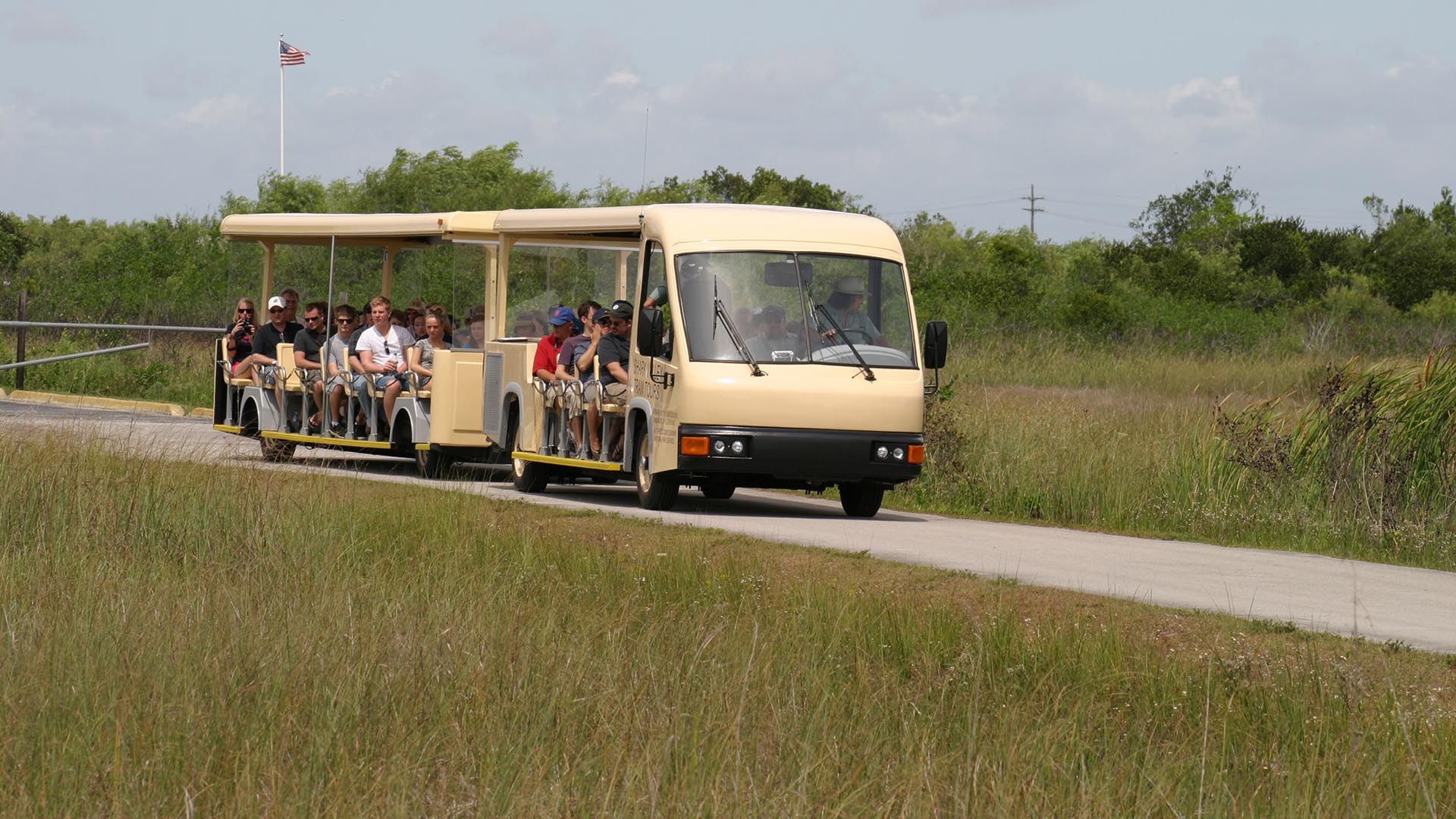
Tram Ride
to Shark Valley Observation Tower
Exploring the Shark Valley area by tram is a great way to see and learn about the wildlife and history of Everglades National Park.
Significantly less strenuous than biking the 15-mile paved loop, the guided two-hour tram tours provide a faster trip through “River of Grass”.
The open air trams allow for abundant wildlife viewing opportunities, stopping at the Shark Valley Observation tower for a bird’s eye view of the sweeping Everglades ecosystem.
Tram tours depart from the Shark Valley Visitor Center, located along U.S. Hwy 41/Tamiami Trail, daily. Reservations are strongly recommended from November through April when Everglades National Park is at its busiest.
Halfway around the loop is the main attraction, a 70-foot high observation tower providing a panoramic view of the sawgrass marsh. This deep into the park and away from civilization, it is much as it appeared to to the natives over 300 years ago.
Evening
Everglades National Park is designated as a Dark Sky Place, meaning it has exceptional quality of night sky darkness due to minimal light pollution. Visitors to the Everglades can enjoy breathtaking views of the Milky Way and other celestial wonders under the park’s naturally dark skies.

Full Moon Bike Ride
15 Miles, 3 Hours
Offered a few times a year, the Full Moon Bike Tour at Shark Valley is an amazing way to end your 1-day Everglades National Park Itinerary.
Tours begin at 5:30PM and last about 3 hours. Join a park ranger and watch an amazing sunset over the sawgrass prairie as you bike toward the Observation Tower.
Listen to the Everglades “night symphony” as the full moon climbs slowly into the sky. Climb the observation tower to enjoy the mystery and to feel the magic of the Everglades at night.

Stars Above, Glade Below
Program is approximately 2 hours.
Join rangers and volunteers for a walk and talk to experience the night sky over the sawgrass prairie and learn about the wonders of space.
This galactic journey can feature stars, planets, meteors, constellations, and nocturnal wildlife.
Every program is a little different, depending on sights in the sky and sounds from the marsh. Time of program depends on light levels.
Reservations are required, so please call Shark Valley Visitor Center for start time 305-221-8776).
Want to see the Milky Way!? The best time to see the Milky Way in Everglades National Park is during the dry season (November to April) when there’s less rainfall and humidity. You should plan your trip around the new moon phase, as the absence of moonlight significantly reduces light pollution and allows for better visibility of the stars.

Day 3: Gulf Coast
Access the Gulf Coast of the Everglades from Everglades City. In this area of the park, fresh water and salt meet, creating an ideal climate for plants to thrive.
The new Marjory Stoneman Douglas Visitor Center is now open! After extensive improvements completed in late 2025, this area offers a seamless experience for those looking to explore the western gateway of the park.
Morning
The wait is over! With the renovations to the Marjory Stoneman Douglas Visitor Center completed late in 2025, the Gulf Coast area is fully refreshed and ready for your visit. We highly recommend taking a ranger-guided paddle to explore the pristine beaches of the Gulf Coast. Look for seashells, enjoy a swim in the Gulf of Mexico, or simply relax on the sand.

Ranger Programs!
Marjory Stoneman Douglas Visitor Center
Since the new Marjory Stoneman Douglas Visitor Center is officially open for the 2026 season, the ranger programs have moved back to this stunning waterfront location.
– 10,000 Islands Ranger-Led Boat Tour: Join a ranger on the concessionaire pontoon boat for a deep dive into the labyrinth of mangroves. They help spot dolphins and manatees while sharing the history of the Calusa people.
– Turner River Discovery Kayak Trip: A more active, 3-hour guided paddle. It’s a moderate challenge that takes you through the transition from freshwater cypress to saltwater mangroves.
– “Ranger’s Choice” Talks: These are quick, 15–20 minute sessions held at the visitor center or the nearby Museum of the Everglades. Topics rotate daily!

Sandfly Island Hiking Trail
Gulf Coast Visitor Center
Boat Launch
Access the Sandfly Island hiking trail by canoe/kayak or motorboat. A peaceful start to your morning would include the 0.9-mile hiking trail.
It’s only a mile long but visitors should allow 40 minutes to complete. The surface is bare ground and the trail is not wheelchair accessible.
Sandfly Island is a 1.5 mile paddle (or motorboat ride) from the Gulf Coast Visitor Center boat launch.
Afternoon
The Gulf Coast area serves as the gateway for exploring the Ten Thousand Islands. This is a maze of mangrove islands and waterways that extends to Flamingo and Florida Bay. This region of the park is only accessible by boat. Boat tours are available from Everglades City.

Ten Thousand Islands Boat Tour
Book Through Everglades National Park Adventures
Schedule your Ten Thousand Islands Boat Tour in Everglades National Park to navigate through a unique ecosystem, view incredible wildlife, and learn from the experiences guides.
Enjoy a cruise through the intricate network of mangrove-lined waterways that make up the “Ten Thousand Islands.” Keep an eye out for dolphins, manatees, a variety of bird species (like ospreys, herons, and egrets), and possibly even sea turtles on your trip.
Enjoy the beauty of the coastal islands, mangrove forests, and the open waters of the Gulf of Mexico while learning Historical and ecological information.

Add the Swamp Buggy
Everglades National
Park Adventures
Add on to your cruise with a unique swamp buggy experience!
Explore two exclusive Everglades ecosystems on a Ten Thousand Islands Boat and Swamp Buggy Tour.
You’ll begin your boat tour on the Barron River, viewing the famous historic buildings of Everglades City. As you cruise into Chokoloskee Bay and the Ten Thousand Islands within the Park, the breathtaking scenery and wildlife sightings steal the show!
After your boat ride, explore a cypress forest on a buggy tour. Watch out for alligators, bears, and deer—they may have their eyes on you!
This tour combinations offers a truly unique perspective of the diverse ecosystems and wildlife of the Everglades. If you don’t have time for the sawmp buggy, definitely take the boat ride!
Evening
A great way to spend an evening in the Everglades Gulf Coast is to explore the mangrove forests before watching an incredible sunset on the gulf.
We’ll be back to update this section after this area of the park is reopened and improved!
Perfect One Day Everglades National Park Itinerary: Hiking, Wildlife, & Paddling!
There may be three different entrances to Everglades National Park, but we’re partial to the Homestead entrance for all of the variety it offers.
Hiking and paddling through the park to witness its beauty and incredible wildlife variety is a dream. Luckily, between Royal Palm and Flamingo, you can have a little bit of it all!
Wander with KT and join the newsletter for access to this Free PDF and a variety of other adventure travel PDFs. The Itinerary Library will help you plan endless incredible adventures.


WanderwithKT’s
Everglades Gear Recs.
These are affiliate links. They help me out at no further cost to you!
Sunglasses
Bucket Hat
Sun Shirt
Annual Park Pass
10 frequently asked questions about visiting Everglades National Park
Looking forward to your trip and hoping to check all the boxes before you go? We have you covered with ten frequently asked questions and our very best answers!
1. What is the best time to visit Everglades National Park?
Dry Season, between the milder winter months of November and April, is generally considered the best time of year to visit. There tends to be less rainfall and humidity, with comfortable temperatures for outdoor activities. Additionally, due to lower water levels, wildlife is much easier to spot!
Hurricane season and wet season, June through November, are the worst times of year to visit the Everglades.
2. What are the main areas of the Everglades to visit?
There are four main areas of the Everglades accessed via three different park entrances. Each location has its own visitors center to help you learn more about the area and talk to a Park Ranger if needed!
- Royal Palm: Anhinga Trail, boardwalk, visitor center. (Homestead Park Entrance)
- Flamingo: Boat tours, kayaking, beach access. (Homestead Park Entrance)
- Shark Valley: Tram tours, bike rides, observation tower. (Shark Valley Park Entrance)
- Gulf Coast: Beaches, mangrove forests, coastal ecosystems. (Everglades City Park Entrance)

3. What should I bring with me to the Everglades?
Here’s the basics everyone should bring with them to the Everglades no matter what the activity!
- Sunscreen: Essential due to strong Florida sun.
- Sunshirt: A longsleeve shirt meant to protect skin from the UV rays.
- Insect repellent: To deter mosquitoes and other insects.
- Hat: For sun protection.
- Water bottle: Stay hydrated, especially during warmer months.
- Comfortable shoes: For walking and hiking.
- Binoculars: To enhance wildlife viewing.
- Camera: To capture the beauty of the Everglades.
Now if you are paddling, biking, or partcipating in a wet walk, this list might change! Try to write out a list before your trip to make sure you have everything you need.
4. Are there any entrance fees to the park?
Yes, there is an entrance fee. There are a few types; aside from the America the Beautiful Pass which is good for any National Park Service Site for a full calendar year, the entry free is good for a 7-day period.
- Private Vehicle: $35.00
- Motorcycle: $30.00
- Per Person: $20.00
- Education/Academic Group: $0.00
- The America the Beautiful Pass is also accepted: $80
5. Where can I stay near the Everglades?
There are plenty of places ot stay to enhance your Everglades National Park Itinerary!
- There are lodging options in nearby towns like Homestead and Everglades City.
- There are really beautiful lodging options in Flamingo
- Camgrounds and Glamping are available within the park.
- Everglades City and Chokoloskee hotels
Consider booking accommodations in advance, especially during peak season.

6. Where are the other Florida National Parks?
Florida is home to several National Parks and preserves. Aside from the Everlgades you have:
- Biscayne National Park
Accessible only by boat, Biscayne National Park encompasses coral reefs, islands and shoreline mangrove forest in the northern Florida Keys. - Dry Tortugas National Park
Dry Tortugas National Park is comprised of 7 small islands and protected coral reefs in the Gulf of Mexico, west of Key West, Florida. - Big Cypress National Preserve
Located adjacent to Everglades National Park, Big Cypress National Preserve was established in 1974, providing the Miccosukee, Seminole and Traditional people with permanent rights to occupy and use the land in traditional way.
7. Can I bring my pet to the Everglades?
Pets are generally not allowed on hiking trails within the park.
Check park regulations for specific pet restrictions and more information on service animals.
8. What kind of Wildlife is in Everglades National Park?
Wildlife is a guarantee on this Everglades National Park Itinerary. You can see everything from Alligator and Manatee to Great Blue Heron and Great Egret. Although rarely spotted, Florida Panthers also call Everglades home.
If you spot wildlife, especially Alligators, Snakes, Black Bear and other predators maintain a safe distance. Never feed wildlife and if it seems aggitated or aggressive, back away slowly and calmly.

9. Are there any restaurants or food options within the park?
Limited food options are available at some visitor centers so it’s best to bring your own food and snacks. In Flamingo, however, there is a new restaurant that receives great reviews.
10. How do I get to Everglades National Park?
Located on the southern tip of Florida, many people visit Everglades National Park from Miami. Any major cities in South Florida, including Fort Lauderdale, Key Largo, and Fort Myers are very accessible for a day trip to Everglades National Park.
Conclusion
This itinerary provides a starting point for your Everglades adventure. Feel free to customize it based on your interests and time constraints. Remember to be patient and observant, and you’ll be rewarded with unforgettable encounters with the incredible wildlife and natural beauty of this unique ecosystem.
Disclaimer: This itinerary is for informational purposes only. Always check official park websites and regulations for the most up-to-date information.